
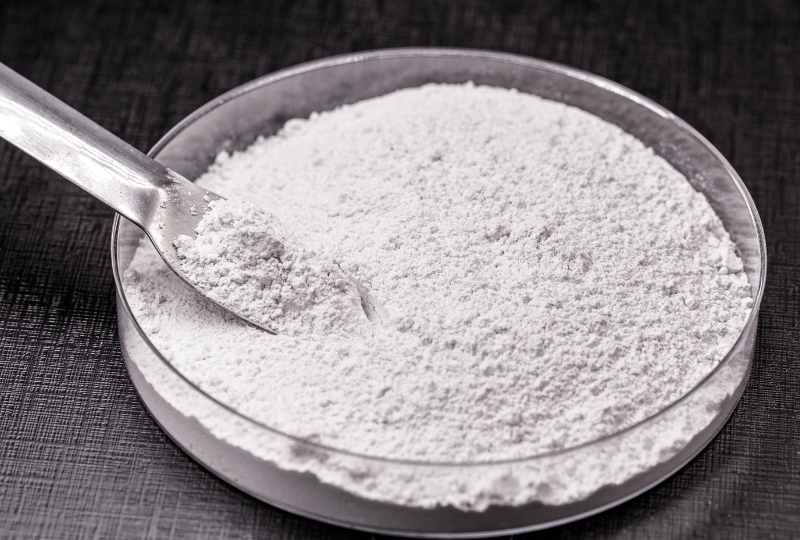
Getting to Know What Zinc Dust Is and Its Benefits for Industries
Zinc dust is a very useful zinc particle that’s already used commonly. This material is needed in various industries due to its very important role.
What Is Zinc Dust and The Benefits of It
This material is a microscopic zinc particle resulting from the processing of zinc metal. Zinc dust has high electrical conductivity and excellent chemical reactivity.
With that, it’s no wonder that this material has many benefits in various industries. This bluish-gray material comes from the condensation process of zinc vapor.
In the industrial world, this material often resembles zinc powder. However, both have different production methods, where both undergo a vapor condensation process, but the size, particles, shape, and surface purity levels are clearly different.
Main Benefits
This material has many benefits for various industries. Generally, this material is indeed used in the chemical industry, as follows
- Anti-Corrosion Coating Paint: This material is utilized in the paint industry, especially for anti-corrosion materials. Its presence can protect steel structures such as tanks, bridges, and offshore platforms from rust through a cathodic protection mechanism.
- Refining Precious Metals: In the mining industry, the benefit of this material is for the Merrill-Crowe process to precipitate gold and silver from cyanide solution.
- Chemical Industry: Generally, this substance is useful in the chemical industry as a reducing agent to produce various chemicals, dyes, and also organic intermediates.
- Battery Production: This material is used as the anode inside alkaline batteries because it can release electrons more efficiently.
- Metal Alloys and Casting: Useful in the production of zinc alloys and metal molds, such as die-casting.
In every industry, this material has its own specific uses. So, it’s no wonder that there are many people interested in this material.
So, in general, zinc dust is indeed known to be very versatile. This material is crucial in extending the lifespan of metal components and the efficiency of industrial chemical processes.